Despite growing cellular networks, much of the US is still a dead zone, especially in rural and mountainous areas. Now, Starlink and T-Mobile are teaming up to offer more reliable coverage via satellite.
Direct-to-Cell Satellite Coverage
In 2024, when Hurricane Helene left behind utter devastation in western North Carolina, the FCC gave Elon Musk approval to enable direct-to-cell coverage via his Starlink satellites. This gave residents the ability to contact friends, family, and emergency services even though cell towers in the area had been destroyed.
Now, T-Mobile and Elon Musk have teamed up to offer this capability beyond just major emergencies. After all, it’s not exactly pleasant to break down late at night and have to walk several miles along a dark road hoping to see a few bars pop up on your phone to call for help.
The program started with a few select Android devices capable of testing the program. Now, Apple has added in support in their latest update. Currently, iPhones with iOS 18.3 are eligible of working on the direct-to-cell satellite network.
After how well things worked in the North Carolina mountains, the FCC allowed Starlink to continue working on the project to provide cell service and Internet access in dead zones. The Starlink and T-Mobile partnership is the first to gain approval for a cell-satellite collaboration for wider coverage throughout the US.
This is yet another partnership with Starlink to offer more convenience to customers on the go. United Airlines also partnered with the satellite Internet provider to offer better Wi-Fi on flights.
Beta Testing Open, Now With iPhones
Beta testing registration officially opened in December 2024, though Apple iPhones weren’t eligible for the program until January 28th and only with the latest iOS update.
The program is being tested across 500,000 square miles that aren’t currently supported by cell towers. Individuals, businesses, and first responders are all eligible to register for the beta. T-Mobile plans to offer a full list of compatible devices when the testing opens sometime in 2025 (no date announced just yet).
Spots are limited and everyone who registers won’t make it into the program. However, it’s free to signup and be part of the beta test.
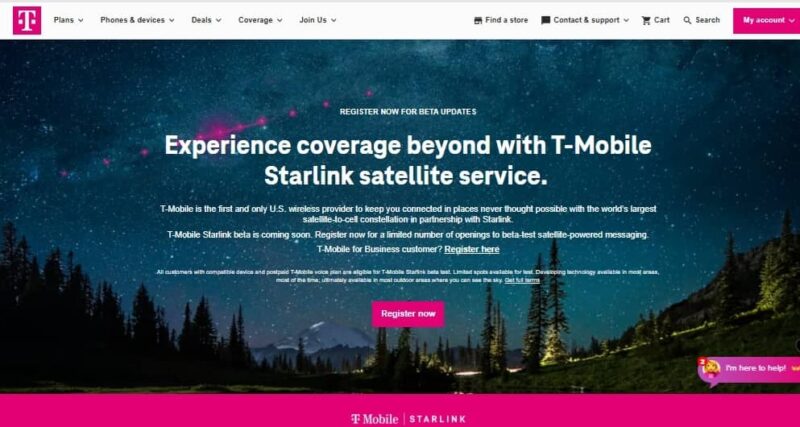
The only downside is direct-to-cell satellite coverage will only support texting at the moment. This is to reduce bandwidth during the testing phase. T-Mobile and Starlink have stated voice and data support are in the works, but they want to perfect texting first.
Once testing is complete, T-Mobile hopes to roll out coverage to more areas to offer the largest coverage area of any mobile carrier. Perhaps in the future, it could even extend T-Mobile’s home Internet offerings. But, Starlink isn’t cheap. Home satellite coverage is $120/month and unlimited roaming for traveling is $165/month.
While T-Mobile hasn’t released any possible pricing, you can bet it will increase your mobile bill. However, if you live or travel in areas with large dead zones, it could be worth whatever price increase occurs. For instance, a major interstate where I live has several lengthy dead spots, making it difficult to call for help in an emergency.
Even if you’re not eligible currently for the beta through T-Mobile, sign up to receive updates about the program.
For now, you’ll still need standard cell coverage or Wi-Fi to text. Use these tips to text no matter where you’re traveling.
Image credit: Unsplash