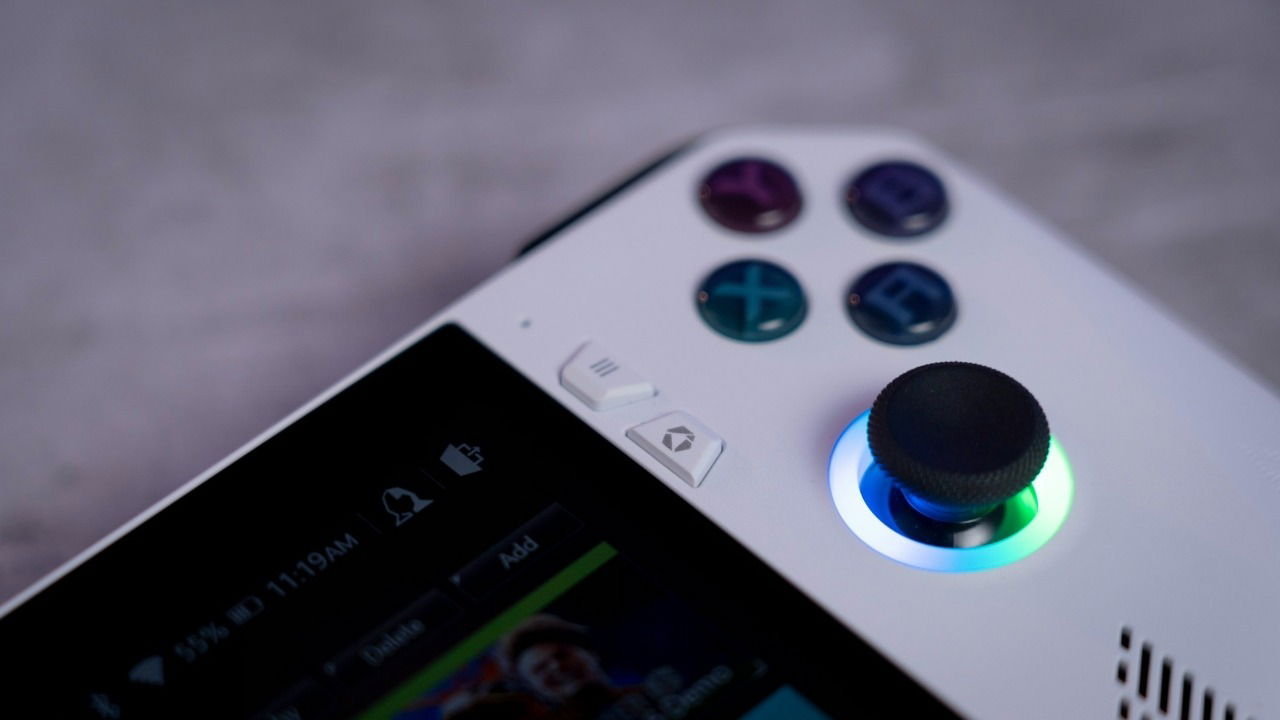
The Nintendo Switch may have started it all, but the Steam Deck truly pushed gaming handhelds into the mainstream. It packs a punch and can run almost all your favorite titles in a compact, handheld form factor. Once it became popular, other players entered the market, trying to replicate its success. From Asus and Lenovo to Ayaneo, there are many Steam Deck alternatives worth a look.
FYI: wondering what to play on the go? Take a look at the best Steam Deck games you just can’t miss.
Asus ROG Ally Z1 Extreme
Lenovo Legion Go
Ayaneo Air Pro

Ayaneo Flip DS
GPD Win 4
Our Criteria
When choosing a handheld game console that can rival – or at least emulate – the Steam Deck, you need to be picky. While there’s no lack of options in the gaming handheld space, not everything deserves your attention, so we chose the best Steam Deck alternatives in the following categories.
Performance
What’s powering your handheld console comes first. This includes primarily the processor, graphics, and RAM. While most handhelds ship with a minimum of 16GB RAM, differences often come down to the processor and graphical prowess.
Display
The display is another major factor when choosing handhelds, as your gaming experience hinges on it. 720p displays are fine for the handheld form factor, but you can also find FHD, QHD, and OLED displays on many devices.
Portability
It’s a game console you take with you, so weight and size are key. Most of the handhelds clock in at under two pounds. And the biggest of them can go up to almost nine inches in screen size. But there are also lightweight and compact options.
Design and Features
The design of the device determines comfort, as well as the degree of fun you’ll get out of your console. Does it have easy-to-use controls and removable controllers? Is it sleek? Does it have a dock and USB-C ports? The features play a part in the experience.
Battery Life
Typical battery life on a handheld ranges from 2 hours (max performance) to 10 hours (light games), which isn’t great. Among the best options, it’s important to know which ones deliver the most juice for your portable gaming sessions.
Tip: struggling to make your gaming sessions last? Learn how to improve battery life on your Steam Deck.
User Experience
Lastly, the operating system determines the usability of a gaming handheld, and not every OS is built the same. From Windows 11 to proprietary operating systems, there are multiple ways to customize your user experience.
Good to know: want some DIY tips for your Steam Deck? Check out these Steam Deck mods to try for free
Best Overall Pick: Asus ROG Ally
Among the many Windows-based gaming handhelds, the Asus ROG Ally is the best Steam Deck alternative. It excels in performance, thanks to the AMD Ryzen Z1 Extreme processor, has a super-bright 120Hz Full HD display, and comes with a great, gamer-focused design. The optional Asus Armory Crate interface transforms the UI from a full Windows 11 experience to a more manageable one.
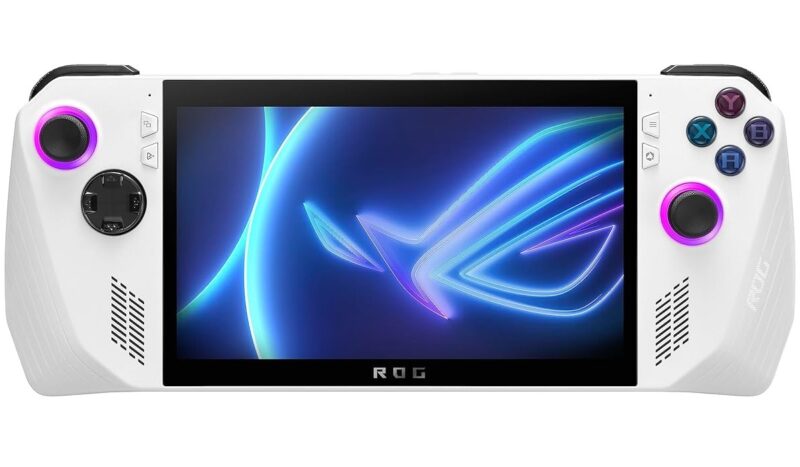
The ROG Ally was one of the first Steam Deck alternatives and still remains in the top spot due to its stable operation and features: fingerprint reader, haptic feedback, curved sides, and shoulder buttons, comfortable ABXY buttons, and grippy texture. Battery life during gaming could be better, but this is still one of the greatest gaming handhelds on the market.
FYI: check out our Asus ROG Ally vs. Steam Deck guide to learn more about how the two compare.
Best Value: Lenovo Legion Go
The Lenovo Legion Go is similar to the Asus ROG Ally in performance and core specs, but it’s also very different. What sets it apart from all Windows handhelds is its removable controllers and massive 8.8-inch, 165Hz, Quad HD+ screen. You can use the controllers wirelessly, plus the scroll wheel and other buttons on the right controller make it much like using a mouse. There’s even a kickstand for enjoying movies on the gorgeous screen.
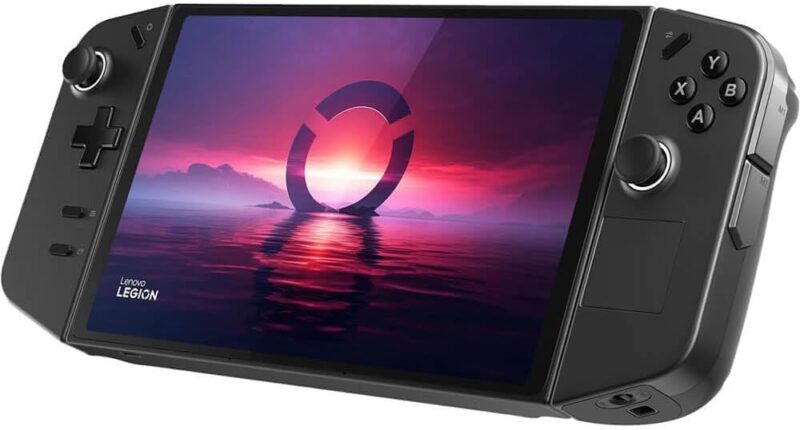
The AMD Ryzen Z1 Extreme processor takes care of the top-tier performance, while the RAM and storage configurations are as expected. Frankly, if it weren’t for its hefty build and inconsistent software, this would have been our top pick. Despite its issues, though, the Legion Go is a fantastic piece of tech, and if you want the absolute best display and Switch-like controllers, there’s really nothing like it.
Best Lightweight: Ayaneo Air Pro
Returning to Windows handhelds, the Ayaneo Air Pro is a unique beast. It packs an 8-core AMD processor in a lightweight, thin form factor. Besides the impressive feat of stuffing such performance in a compact and comfortable design, the Air Pro also runs quiet and comes with a lot of CPU, RAM, and storage variants.
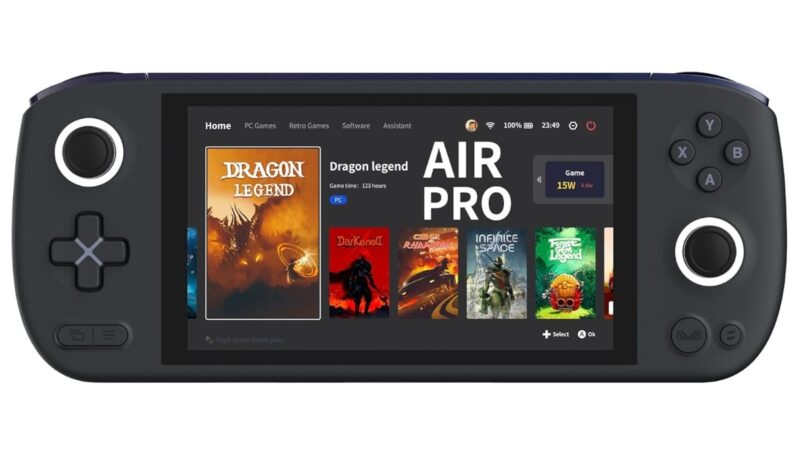
The AMD 6-core CPU variant is only slightly heavier than the compact Nintendo Switch, and you can really feel that in the Air Pro’s design. The 1080p OLED display looks crisp and bright, much better than the Steam Deck’s LCD screen. You need to pay a premium for the super-compact build, but the impressive performance and user-friendly controls can justify it for many gamers. Ayaneo’s updated Air 1S has better specs but also a hefty price bump, while the Air Pro is better for most gamers.
Best for Dual Screen Gaming: Ayaneo Flip DS
The Ayaneo Flip DS’s screen auto-locks at 120, 150, and 180 degrees, respectively. With its dual-screen capabilities, you can play games while performing multiple other actions (such as watching videos on your device). The console features a simple key layout, with joysticks, navigation buttons, and more.
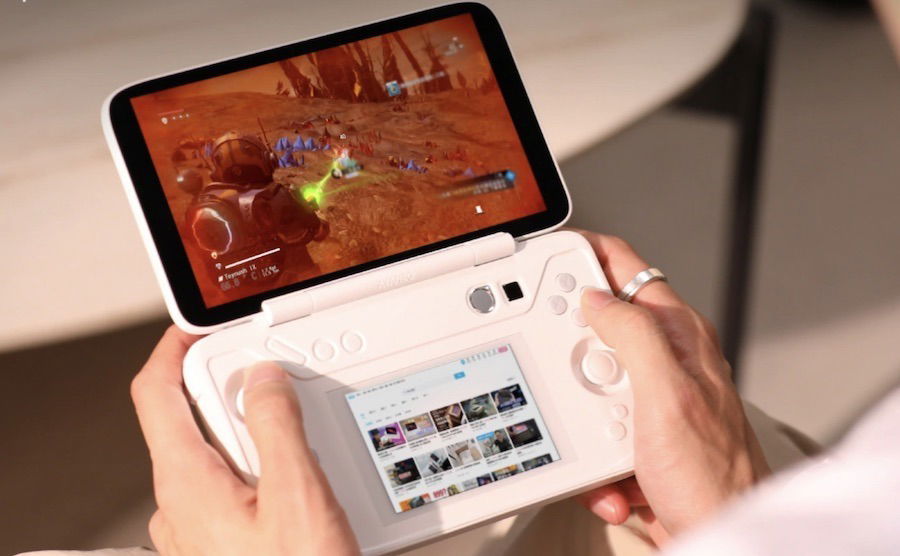
The Ayaneo Flip DS has a 1200:1 contrast ratio and 120Hz high refresh rate. You also get 314PPI pixel density. It’s possible to choose from two colors for your gaming console: black and white. You’ll also get an intuitive grip design that will make playing games both fun and comfortable. To ensure the best possible experience, it’s also possible to use sensitivity adjustment for your joystick and numerous other aspects.
Best for Keyboard-Based Gaming: GPD Win 4
The GPD Win 4 gives you the option to play with a keyboard or via the standard handheld games console layout. It’s fully compatible with steamOS, and you can also connect it to your computer if you wish to. The keyboard is fully backlit, making it ideal if you want to play in low-light situations.
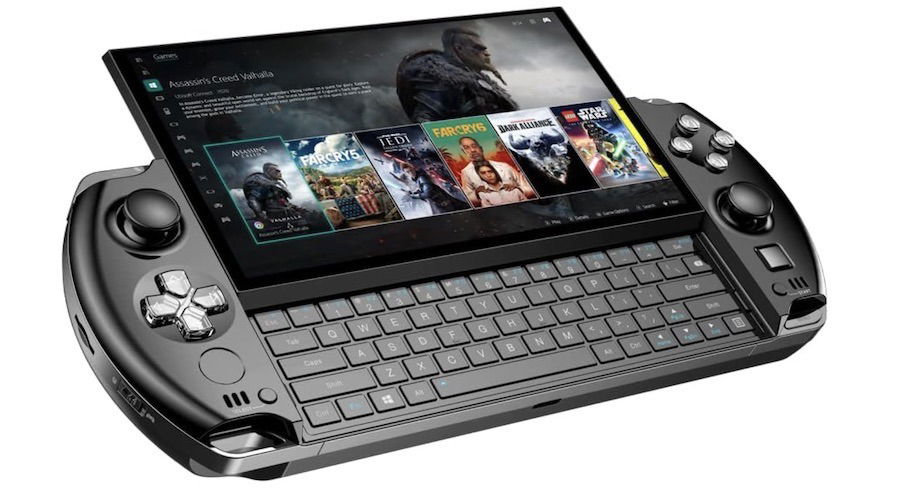
The GPD Win 4 has a very good grip when you play, and it also has an AMD Ryzen 7 8840U central processing unit (CPU). You’ll get a six-inch display when using this device, meaning that you can carry it around with no issues.
Tip: want to stream your games from your PC to your handheld? Check out Steam Remote Play.
Frequently Asked Questions
How do these alternative devices differ from the Steam Deck?
While almost all of these Steam Deck alternatives share design cues with the Steam Deck, they use Windows instead of SteamOS and bring certain usability features of their own, such as removable controllers or ergonomic controls.
How does the price of Steam Deck compare to its alternatives?
The Steam Deck comes in three variants: the 256GB LCD, 512GB OLED, and 1TB OLED. The price of these models ranges from $399 to $649. The Steam Deck alternatives on our list range from $299 for the cloud gaming-focused Logitech G Cloud to the $699 ROG Ally and Legion Go.
What chipset does the Steam Deck and its alternatives use?
The Steam Deck runs a custom 4-core AMD Zen 2 CPU, while its most popular alternatives, like the Asus ROG Ally and the Lenovo Legion Go, ship with the AMD Ryzen Z1 Extreme CPU, which is an 8-core Zen 4 processor. Hence, the Steam Deck alternatives pack a lot more power than Valve’s portable PC.
Image credit: Unsplash